Wednesday, 8 March 2023

Addressing critical gender gaps including female labour force participation, providing an opportunity to boost incomes and stimulate growth through the Eco-Friendly Climate Smart Farmer Training School at Thirappane, Sri Lanka

The World Bank Funded Climate Smart Irrigated Agriculture Project (CSIAP) has been implemented under the Ministry of Agriculture (MoA) in 2019 as a five-year project to improve the climate resilience of smallholder farming communities and improve the productivity of irrigated agriculture in 06 Provinces, 11 districts, 52 Agrarian Service Centers (ASCs) Divisions, and 256 Grama Niladhari Divisions (GNDs) which areas are identified as climatically vulnerable hotspot areas in Sri Lanka. Climatically vulnerable hotspot areas reveal that the prolonged draughts, heavy intense rainfall flash floods, variation of seasonal patterns, strong winds, and rising sea levels have become the main climate change impacts for the farmers living in hotspot areas.

The CSIAP is promoting various adaptation strategies to combat the climate change impacts for project beneficiaries those are:

1.     Promote Climate Smart Agriculture (CSA) practices and technologies among men and women smallholder farmers.

2.    Provide water for agriculture through the rehabilitation of minor tanks, and improve the cascade development.

3.    Increase access to the markets by promoting market linkages, post-harvest processing, value chain development, and providing the machinery for improving the value chain development activities.

4.    Promote climate change adaptation and CSA technologies among smallholder farmer beneficiaries (men and women farmers) through capacity-building and by providing required agricultural inputs.

CSA is a quite new concept to the Sri Lankan smallholder farming community, even though the farmers apply some traditional CSA practices without a real scientific background. Therefore, there is a critical need to increase and build the capacities of stallholder men and women farmers for the use of CSA technologies and practices to fulfil the requirement.  In this scenario, an eco-friendly dedicated CSA Farmer Training School (FTS) was newly built by the CSIAP which opened end of 2022 in the Thirappane area of the Anuradhapura District. Officials of the Provincial Deputy Project Directors Offices (PDPDO) are already involved in selecting the lead farmers through the Farmer Organizations (FO) and Producer Societies (PS) for the training. Through that, farmers are promoted to build up their knowledge, and skills on the CSA technologies among both men and women through the newly built FTS of CSIAP. Once the lead farmers get knowledge of the CSA technology at the FTS, they go back to their villages and share their knowledge with the other farmers.

 The men and women farmers are identified by the provincial Deputy Project Director (DPD) offices to represent all ASC divisions and make necessary arrangements to transport them to FTS promises on time. 25 lead farmers (14 men and 11 women) are being recruited to each batch for the 03 days residential training program on CSA practices and technology at the FTS. Most importantly, CSIAP is always ensuring the project’s target that is when the lead farmers are recruited to the CSA training program, at least 40% of the leaded farmers should be female farmers. Therefore, Women farmers will get the opportunity to adopt the CSA technologies in climatically vulnerable hotspot areas. 

The project is continually transferring knowledge on CSA technology to the participants through the FTS. Men and women farmers gain knowledge on the climate change impacts, mitigation, and adaptation of climate change impacts, how CSA can help to overcome the adverse impacts of climate change, sustainable management of the natural and farming landscape, building the resilience of local ecosystems, adjusting cropping calendar as per weather forecast, selection of tolerated crop varieties, on-farm water management technics, building soil resilience through soil fertility management, protecting crops from climate-induced pest resurgence, and sustainable intensification of crop production, crop-livestock integration, fodder protection, and seasonal stocking of freshwater fish in the village tanks, productivity enhancement through mechanization, the use of market information, value addition, and marketing for increasing farmer income. Knowledge acquired from training used for CSIAP interventions, and knowledge disseminated among fellow members of the community.

CSIAP is planned to carry out 62 training sessions for leader farmers (both men and women) and technical officers during the project period and build capacities of 1860 participants on CSA technologies and practices. So far 08 training conducted at the eco-friendly CSA FTS 184 lead men & women farmers have participated. Out of that 42% of women farmers were trained in CSA practices and technology at the FTS.

 Table No: 01 Details of the training program conducted at the dedicated CSA farmer training school, Thirappane on the CSA Practices and Technologies.

An Eco-friendly dedicated CSA farmer training school is one of the most important assets for the farming community in Sri Lanka. Social inequalities put many people on the frontline of harmful climate change impacts while constraining their options for taking action to reduce them through adaptation. Gender is often a defining factor of these barriers to adaptation.

It is important to say that inclusive and meaningful participation of all community groups, particularly the most vulnerable is included in the training programs. Participation in the training program empowers men, women, boys, and girls to find solutions to their development challenges. Empowering women and engaging men in a process where women and men work together as equally recognized decision-makers at the FTS. It is a crucial pathway toward gender equality and resilience among the smallholder farming community in climatically vulnerable hotspot areas.  

In addition to the above facts, men and women farmers listen, learn and respect each other, are trained to be culturally and socially sensitive, prepared to unlearn negative attitudes and stereotypes, personal cultural/ gender bias, share their knowledge, experiences, etc. with their community.                               

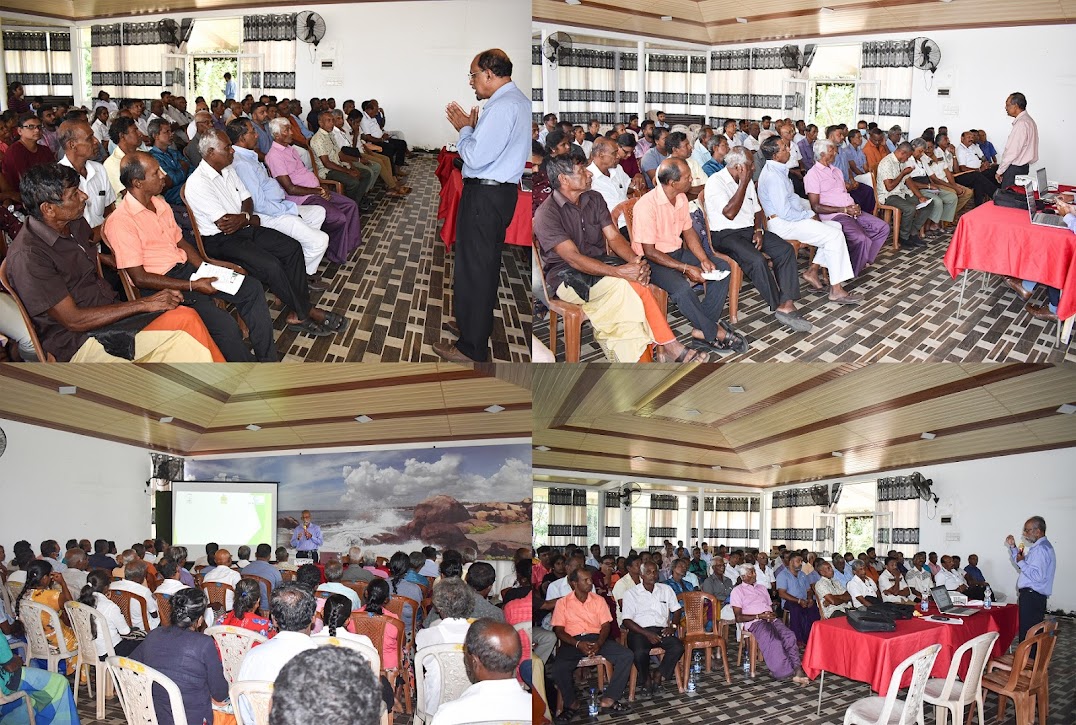
Females' participation on training programmes at Framer Training School in Thirappane, Anuradhapura

Written by Sharmila Thirhiharan, Gender Development Officer, PMU, CSIAP

Friday, 3 March 2023

The World Bank Vice President receives a token of appreciation from MoA

Mr. Martin Raiser, South Asian Vice President of the World Bank receives a token of appreciation prepared by the Climate Smart Irrigated Agriculture Project (CSIAP)  during the observation tour at the Farmer Training School ( FTS) in Thirappane, Anuradhapura from Mr. Gunadasa Samarasinghe, Secretary of Agriculture recently. 
The FTS, which has been designed to build the capacity of project beneficiaries for the use of Climate Smart Agriculture (CSA) technologies and combat the adverse impact of climate change, was built at a cost of Rs. 40 million by the Climate Smart Irrigated Agriculture Project funded by the World Bank and implemented under the Ministry of Agriculture. The FTS where Mr. Faris H. Hadad-Zervos and Ms. Chiyo Kanda laid foundation stones on 22nd December 2021, was declared open by Hon. Mahinda Amaraweera, the Minister of Agriculture on 04th December 2022.  

"The FTS prepares SL farmers for climate change" Martin Raiser, RVP of the WB

 The first ever Climate Smart Farmer Training School in South Asia established at Thirappane will prepare Sri Lankan farmers for climate change, said Mr. Martin Raiser, World Bank Vice President for South Asia during a visit to the Farmer Training School (FTS) at Thirappane, Anuradhapura recently. “What the farmers learn here is how to conserve water and how to use new planting techniques. I was told, with these techniques they can increase income by 30% and reduce the water that they need to irrigate by more than half,” Mr. Raiser added.

The World Bank’s Vice President visited the FTS in the company of Mr. Faris H. Hadad-Zervos, Country Director of the World Bank for Nepal, Maldives and Sri Lanka, Ms. Chiyo Kanda, Country Manager of the World Bank for Maldives and Sri Lanka and other World Bank officials. The FTS, built at a cost of Rs. 40 million by the World Bank-funded Climate Smart Irrigated Agriculture Project (CSIAP) and implemented by the Ministry of Agriculture, has been designed to build the capacity of project beneficiaries for the use of Climate Smart Agriculture (CSA) technologies and combat the adverse impacts of climate change. Mr. Faris H. Hadad-Zervos and Ms. Chiyo Kanda laid foundation stones for the FTS on 22 December 2021, and the school was declared open by Hon. Mahinda Amaraweera, the Minister of Agriculture on 4 December 2022.

Expressing his views, Mr. Raiser said, “The Farmer Training School at Thirappane is a great project. Very happy to see the first Climate Smart Farmer Training School in South Asia and how Sri Lankan farmers are being prepared for climate change.” When inquired about advancing FTS up to international standards, Mr Raiser responded, “There is a lot of international learning that is possible. Some techniques, such as mulching and drip irrigation I see here, have been used in other countries like China. However, lot of the knowledge needs to be local – you need to understand the local crops and the local soil. Sri Lanka has the capacity, with some international support, to develop a top class system yourselves.” “We also have internationally renowned Agriculture Experts who can come here and talk to local scientists to develop the right solutions together,” added Mr. Raiser.

A part of the CSIAP project is focusing on the rehabilitation of local irrigation systems. This system retains rainwater and then transmit it along irrigation channels onto the command area of the CSIAP. Several of Sri Lanka’s irrigation channels, draining systems and tanks are currently dilapidated and silted up. This means they can store less water and the soil is salinized; thus, more land erodes into tanks. This reduces the effectiveness of the agriculture systems in Sri Lanka. The goal of CSIAP is to rehabilitate local irrigation systems and improve farmer knowledge to ensure Sri Lanka’s future in climate-smart agriculture and help generate higher incomes for farmers.

“My message to Sri Lankan farmers is to continue to study and learn. Do not just do everything that you have done. Find a better way to do it. Talk to each other, communicate, learn from others, and share experiences. That’s why a school like this is here.”

The Vice President, Country Director and Country Manger awarded certificates to Farmer Leaders from Gomarankadawara Agrerian Service Center Division in Eastern Province of  the 6th group who undertook a 3-day Residential Training Programme at the FTS. To mark this occasion, Mr. Raiser received a token of appreciation prepared by the CSIAP from Mr. Gunadasa Samarasinghe, Secretary of Agriculture at the event.

Eng. R.M.B. Rajakaruna, Project Director, Climate Smart Irrigation Agriculture Project presented a report on the current progress of the project. Some of the farmers who participated in the training programme expressed their views regarding the benefits they received due to the project.

Mr. Vijaya Wanasinghe, Provincial Secretary of Agriculture, North Central Province, Ms. K.N.C Gunawardhana, Director, Dr. Wasantha Mallawaarachchi- Principle Scientist,  Dr. M.S. Nijamudeen, Principle Scientist, Field crop & Research Development Institute, Mahailuppallama, Ms. Sandya N.G Abeysekara, Additional District Secretary, North Central Province, representatives of implementing agencies, farmers and CSIAP staff attended in this event.

Wednesday, 1 March 2023

The CSIAP continues forming Management Committees in Southern Province

The overall objective of the Cascade Management Committees (CMCs)  is to restore and improve the watershed system through integrated management and manage water and associated natural resources in a sustainable manner to enhance the living standards of rural communities. In order to achieve to above objective, an awareness programme and nominating framer leaders for CMC were conducted at Yodawewa Beach Hotel in Tissamaharama by the Deputy Project Director’s Office of the Climate Smart Irrigated Agriculture Project (CSIAP).  Mr. Mahinda Suwandaarachchi, Deputy Project Director  (Southern Province)  of the CSIAP explained the importance of the CMCs at this programme which was attended by 78 farmer leaders. Mr. R.P.M. Dissanayake, Institutional Development and Capacity Building Specialist (Southern Province and Mr. D.V. Bandulasena, Institutional Development and Capacity Building Specialist(Project Management Unit of the CSIAP also made farmer leaders aware of forming CMCs.

Strengthening the institutional framework in the cascade is identified as one of the key requirements for managing the cascade system. Therefore, CMCs are to be formed, consisting of the farmer Organizations and local level officials for resources (water and land) management at the cascade level. The CSIAP will establish 30 CMCs in North Western, 12 CMCs in North Central, 10 CMCs in Northern, 12 CMCs in Eastern, 07 in Southern and 09 CMS in Uva provinces respectively.

Story by R.P.M. Dissanayake (Institutional Development & Capacity Building Specialist), SP, CSIAP

Tuesday, 21 February 2023

“Today is International Mother Language Day”

International Mother Language Day is observed on February 21st every year to promote linguistic and cultural diversity and multilingualism.  It recognizes that languages and multilingualism can advance inclusion, and the  Sustainable Development Goals focus on leaving no one behind. The day was first proclaimed by the General Conference of the United Nations Educational, Scientific and Cultural Organization (UNESCO) in November 1999, and has been celebrated annually since 2000.

The purpose of the day is to celebrate the diversity of languages and cultures around the world and to promote awareness of the importance of preserving and protecting linguistic diversity. It also aims to promote the use of mother languages in education and everyday life, as well as to encourage people to learn and use other languages. On International Mother Language Day, people around the world celebrate their mother tongues, organize cultural events, and participate in language-related activities to promote linguistic and cultural diversity.

The Climate Smart Irrigated Agriculture Project (CSIAP) funded by the World Bank and implemented under the Ministry of Agriculture uses mother languages to achieve project development objectives in areas where the CSIAP is being implemented in the following way.

1. Effective communication: It is the most natural way of communication for individuals, and using it in agriculture ensures clear and precise communication. In rural areas, farmers may not have a strong grasp of the official language or other languages used in agriculture, and communicating with them in their mother language can help them understand technical information better.

2. Transfer of knowledge and traditional practices: It is often closely tied to the cultural and traditional practices of a community. Using it in agriculture can facilitate the transfer of knowledge and traditional practices from one generation to the next. This is especially important in agriculture, where traditional practices and knowledge can play an important role in sustainable farming and the conservation of natural resources.

3. Engagement and empowerment: Using the mother language in agriculture can help engage and empower farmers who may feel excluded or marginalized due to their limited knowledge of the official language or other languages used in agriculture. This can help create a sense of belonging and community, which can motivate farmers to take an active interest in their work and participate in decision-making processes.

      4. Promotion of local products and culture: It is often closely linked to the culture, identity, and values of a community. Using it in agriculture can help promote local products and culture, which can be beneficial for local economies and the preservation of cultural heritage.

Mother language plays an important role in agriculture by facilitating communication, access to resources, building relationships, and sharing knowledge and best practices. Overall, using the mother language in agriculture can have significant benefits for effective communication, knowledge transfer, empowerment, and the promotion of local products and culture and it can also help create a more inclusive and sustainable agricultural sector to reach the CSIAP’s objectives.

Image: Curtsey of the UN. 

Monday, 20 February 2023

A workshop on "Hydrological Studies Using Software Applications" in NCP

 "Hydrological Studies Using Software Applications", the second one of the workshop series was conducted for engineering and technical staff of the Provincial Irrigation Department, District Agrarian Department and Department of Irrigation in North Central Province by the Design Cell of the Climate Smart Irrigated Agriculture Project (CSIAP) at the Creston Park Hotel, Anuradhapura recently. The purpose of the workshop was to equip Sri Lankan engineers with knowledge and skills to use software related to Hydrological Studies and to transfer the knowledge gained by the Design Cell of the CSIAP to Implementing Agencies and other authorities related to the Irrigation sector.

This workshop, which was held in two sessions of one week each, had been initiated under the instructions of  Eng R.M.B. Rajakauruna, Project Director, the CSIAP and this workshop was guided by the Senior Engineering Consultant Eng. H.G.M.Kulasinghe.  Project Engineering Consultants Eng. R.M.H.N Bandara and Eng. P.H.S. Rangika made their contribution to the workshop as resource persons along with the Engineering Trainee Mr. B.D.M.S.B Dissanayake. Participants received Certificates of participation in the workshop. Mr. S.M Seelarathne, Deputy Project Director (North Central Province) of the CSIAP of CSIAP (NCP) coordinated the workshop.